
Following the end of the grandfathering period given to India Inc to replace their independent directors who had already served for 10 years, certain companies have come up with unique ways to replace the old guard.

Stock exchanges are expanding the buffet of index derivatives even as the number of stocks permitted to trade in this space, generating an average daily turnover of Rs 450 trillion, is shrinking. This week, the National Stock Exchange (NSE) started issuing futures and options (F&O) contracts based on the Nifty Next 50 Index, bringing the total count of index derivatives to five.

The BSE faces a larger outgo after regulatory clarity on the fee to be paid to the Securities and Exchange Board of India (Sebi) as a turnover charge on options volume. The market regulator on Friday directed the exchange to pay a regulatory fee on the 'notional value' of annual turnover.

The Reserve Bank of India (RBI) abstained from selling any US dollars throughout February, for the first time in nine months. The decision comes amid increasing pressure on the rupee, as expectations of rate cuts by the US Federal Reserve keep pushing back. The last time the RBI did not sell dollar over a month was in May 2023.

Foreign portfolio investors (FPIs) from Mauritius may face higher scrutiny after the amendment in the India-Mauritius tax treaty introduced a principle purpose test (PPT) to prevent treaty abuse by taxpayers. The Mauritius government had in February decided to amend the double taxation avoidance agreement (DTAA) with India to align with the Organisation for Economic Co-operation and Development's proposal on base erosion and profit shifting. Although the agreement between India and Mauritius was signed on March 7, the protocol of the amendment was made public for the first time on Wednesday, said legal experts.

Banks are preferring instruments with higher premium over government securities for their held-till-maturity (HTM) portfolio, following the new investment norms, which came into effect from April 1. They are stocking up on corporate bonds and state government securities to boost yield on their portfolio, according to market participants. "Definitely, if there is a good spread available and without lower credit risk, those instruments will be favoured to boost the yield on the portfolio.
Exchange-traded currency derivatives volumes are likely to drop in view of new Reserve Bank of India (RBI) rules, casting a cloud over further participation of retail investors and proprietary traders. There are concerns that existing positions without any underlying exposure will need to be liquidated. Also, weighed down by dollar demand from local oil companies and weakness in its Asian peers, the rupee on Wednesday (April 3) ended at a new closing low of 83.44 versus the US currency.

The National Stock Exchange (NSE) on Tuesday said it has halved the lot size for trading derivatives contracts for the Nifty 50 index to 25 and also reduced the lot sizes of the Nifty Financial Services and Nifty Midcap indices as part of its periodic revision. "All contracts, i.e. weekly, monthly, quarterly, and half-yearly expires available for trading from the trade date of April 26, 2024, onwards will be with the revised market lot size," the NSE said, referring to applicability of the change for Nifty 50. The lot size in the derivatives segment refers to the fixed number of shares in a unit or group for which contracts are traded.

A potential risk to the rupee's appreciation trajectory lies in the event of a delay in the Federal Reserve's rate cut cycle, particularly if core inflation in the US remains elevated.

Before framing regulations to curb 'misleading' messages and stock recommendations by finfluencers (a portmanteau of the phrase 'financial influencers'), the market regulator plans to put in place some 'building blocks' to ensure smooth enforcement. Madhabi Puri Buch, chairperson of Securities and Exchange Board of India (Sebi), is of the view that the 'traditional approach may not work' to rein in finfluencers. "There are many interlinked pieces in our regulations - investment advisor regulations, research analyst regulations, the fact that we don't have algorithmic (algo)-related regulations, what brokers are permitted to do, and what is incidental advice.

The Indian equity market clocked record average daily turnover (ADTV) in both the cash and derivatives segments in February amid a spike in volatility. The ADTV for the cash segment for both the exchanges combined came at Rs 1.27 trillion, while the same for the derivatives or the futures and options (F&O) segment stood at Rs 483 trillion in the previous month. The volumes for both cash and derivatives have almost doubled from a year ago on the back of rising retail participation in the world's fourth largest equity market.

Madhabi Puri Buch, the first female chairperson of Sebi, doesn't plan to rest on her laurels in her third and final year in office and has set out an ambitious goal, such as moving towards a same-day and instantaneous settlement cycle for the secondary market.

The Securities and Exchange Board of India (Sebi) has asked fund houses operating smallcap funds with a large corpus to share data on their holdings in the total free float of smallcap stocks, according to sources. This is part of the stress tests that the regulator wants fund houses to undertake amid a surge in inflows into smallcap schemes and growing concerns about valuations. Free float refers to the quantum of freely available shares for trading on the stock market.

The mystery surrounding the alleged fund diversion from Zee Entertainment Enterprises (Zee) by founders Subhash Chandra and Punit Goenka has thickened with speculations of an amount multiple times higher than that cited by the ex-parte interim order passed by the Securities and Exchange Board of India (Sebi) dated June 12, 2023. While Zee shares witnessed a fresh selloff on Wednesday, news reports of accounting fraud left investors guessing about the hole in the media broadcaster's books. An order by the Securities Appellate Tribunal (SAT) in October 2023 had clearly hinted that Sebi's investigation had found a deeper rout.
Short-term government bonds fell behind longer-dated securities in demand this month so far due to a liquidity crunch in the banking system and expectations of a delay in a rate cut, said market participants. Investors have favoured longer-tenure government bonds, or g-secs, with insurance companies and pension funds leading the charge by stocking up on those with maturities of 30 years and more. Preference for longer-term securities was strengthened by the conclusion of the borrowing programme, which compelled institutional investors to fulfil their requirements in the secondary market.
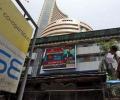
Rising outgo towards clearing and settlement fees has led to an altercation between the BSE and the National Stock Exchange of India (NSE), with the latter striking down the former's request to lower the charges. NSE said it has no plans to restructure the same and that it will continue with the pricing defined under the interoperability framework. The interoperability framework, introduced in 2019, allows trades executed on any of the exchanges to be settled or cleared at either of the two clearing corporations -- NSE Clearing (NCL) or Indian Clearing Corporation (ICCL), fully-owned by the NSE and the BSE, respectively.

The Reserve Bank of India (RBI) conducted two overnight variable rate reverse repo (VRRR) auctions on Tuesday, marking the first instance of such action in a single day. The move aimed to reduce liquidity from the banking system, which has been largely in deficit mode for the past four months. Market participants noted that the central bank held the second VRRR auction due to its awareness of funds being released to banks during the day.

The Reserve Bank of India (RBI) on Monday did a four-day variable rate reverse repo (VRRR) auction to reduce liquidity in the banking system as the overnight money market rates fell below the repo rate, said market participants. The repo rate is 6.50 per cent. Banks parked Rs 18,750 crore at the auction against a notified amount of Rs 50,000 crore at a weighted average rate of 6.49 per cent.

The Securities and Exchange Board of India (Sebi) is considering segregation of settlement for proprietary trades and retail trades to avoid misuse and circumvention by certain brokers, its chairperson Madhabi Puri Buch said recently. Proprietary trading refers to trades done by brokers and other financial institutions using their own capital. "There are some people who are permitting access to their clients through prop accounts for a variety of reasons, including wanting to fund their margins.

Only a fifth of foreign portfolio investors (FPIs) in breach of the market regulator-specified thresholds may need to provide enhanced disclosure on ultimate beneficiaries, thanks to exemptions being provided, according to people in the know. The ultimate beneficial ownership (UBO) disclosures, for FPIs with over 50 per cent holding in a single corporate group or over Rs 25,000 crore exposure to Indian assets, will be required from February 1. But, depending on their category, FPIs will have 10-30 working days to submit these granular details.
 © 2025 Rediff.com - Investor Information - Advertise with us - Disclaimer - Privacy Policy - Sitemap - Feedback - About us - Terms of use - Grievances